If you’re researching a career in healthcare, you’ve probably run into the letters SPD. Here’s what a Sterile Processing Department actually is — and why it’s one of the most important rooms in any hospital.
What SPD stands for
SPD stands for Sterile Processing Department. You’ll also hear it called Central Sterile, Central Service (CS), Central Sterile Supply (CSS), or the Sterile Processing and Distribution department — different names for the same function.
It’s the department responsible for cleaning, inspecting, assembling, sterilizing, and distributing the surgical instruments and equipment used throughout a hospital. Every scalpel, clamp, and instrument tray that goes into an operating room passes through SPD first.
And it’s not just hospitals. Ambulatory surgery centers, dental practices, endoscopy clinics, labor and delivery units, and third-party reprocessing companies all run some version of a sterile processing operation. Anywhere reusable medical instruments touch a patient, someone has to make those instruments safe to use again.
Why SPD matters
Surgery is only as safe as the instruments it uses. If a single tray isn’t properly decontaminated and sterilized, it can put a patient at risk of infection. The sterile processing technicians who staff SPD are the quiet line of defense that keeps surgical patients safe — which is exactly why the role is in steady, growing demand.
There’s a second reason SPD matters that outsiders rarely see: the operating room runs on SPD’s schedule. A busy hospital may turn over hundreds of instrument trays a day. If a tray is late, incomplete, or fails a quality check, a surgery gets delayed — and delayed surgeries cost hospitals real money and patients real anxiety. Good SPD technicians are treated like the skilled professionals they are, because everyone downstream depends on them.
What happens inside an SPD
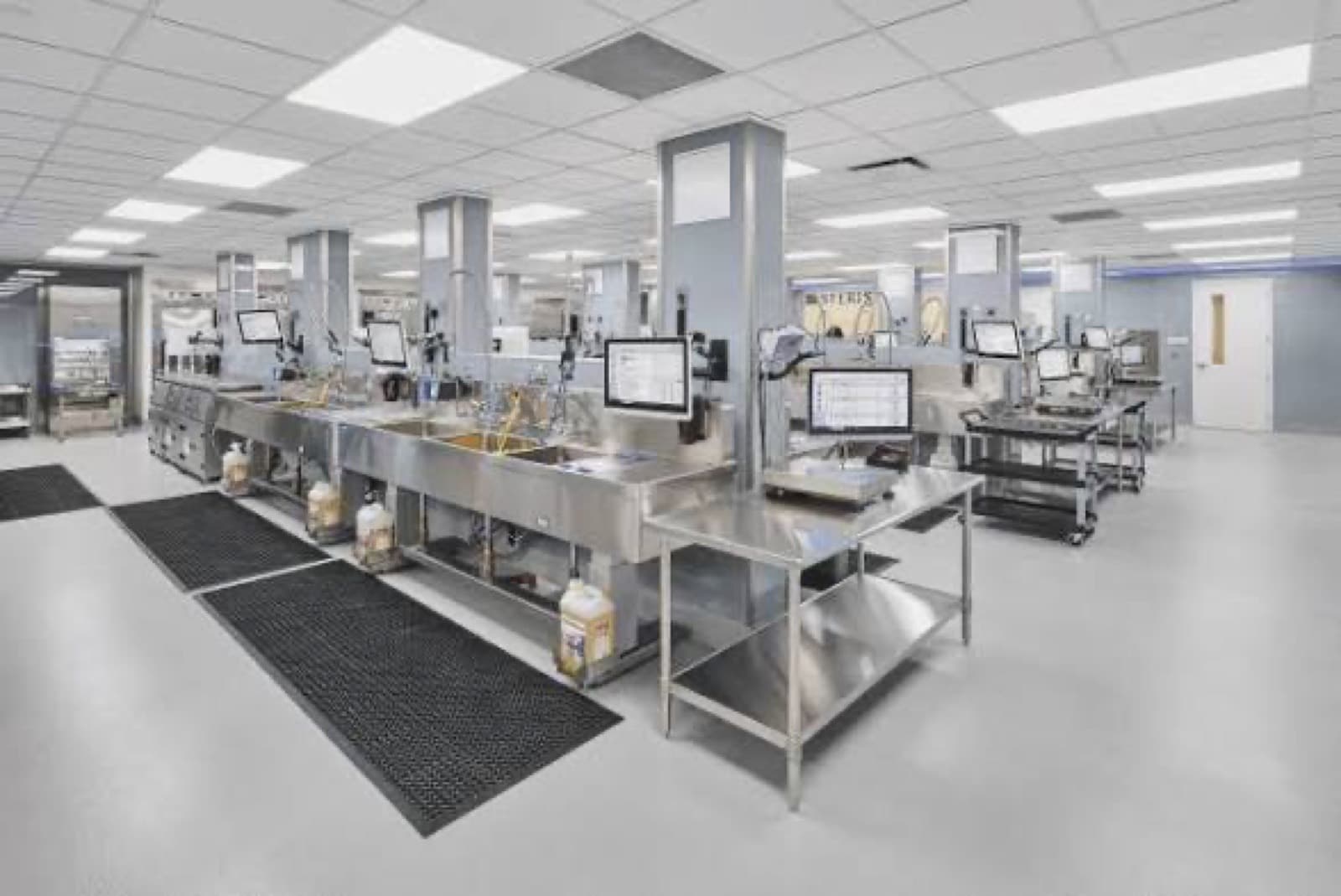
The work flows in one direction — from dirty to clean — to prevent cross-contamination. Dirty instruments never cross paths with sterile ones, and technicians physically move through the department in that same direction. The core stages are:
Decontamination
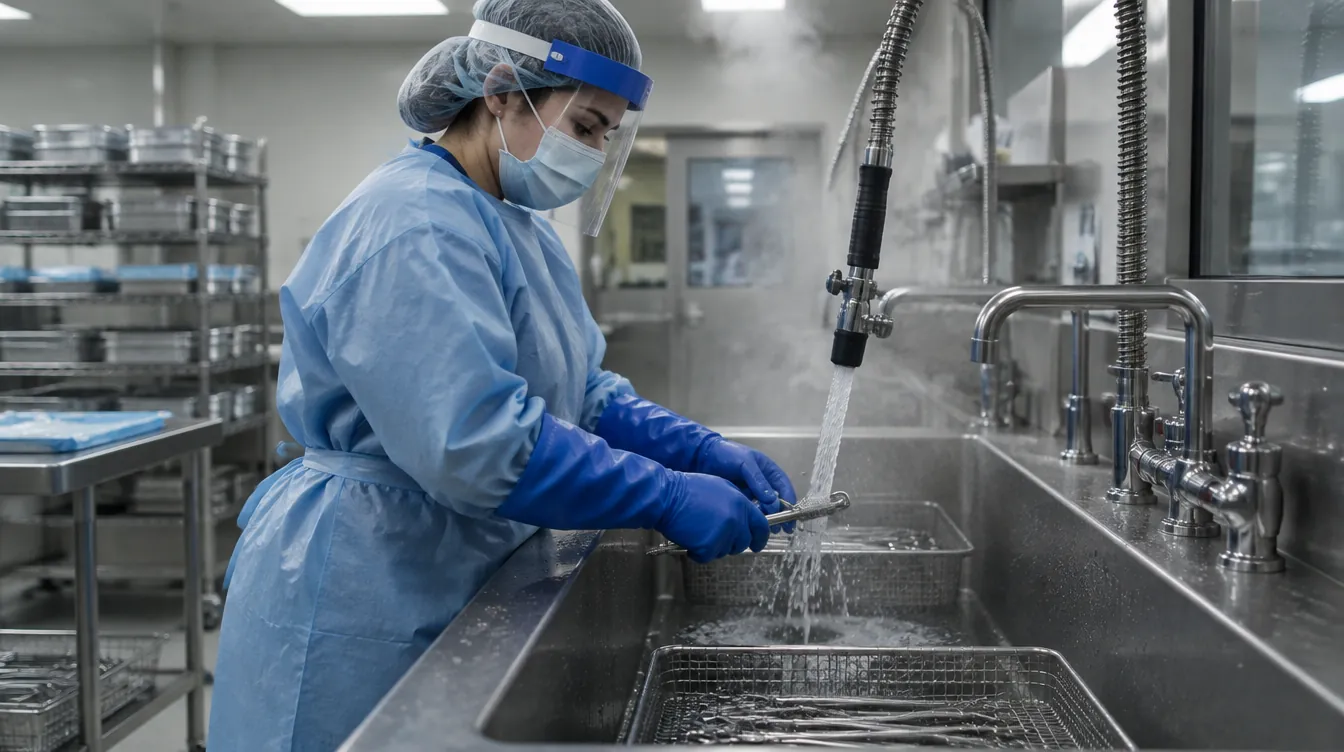
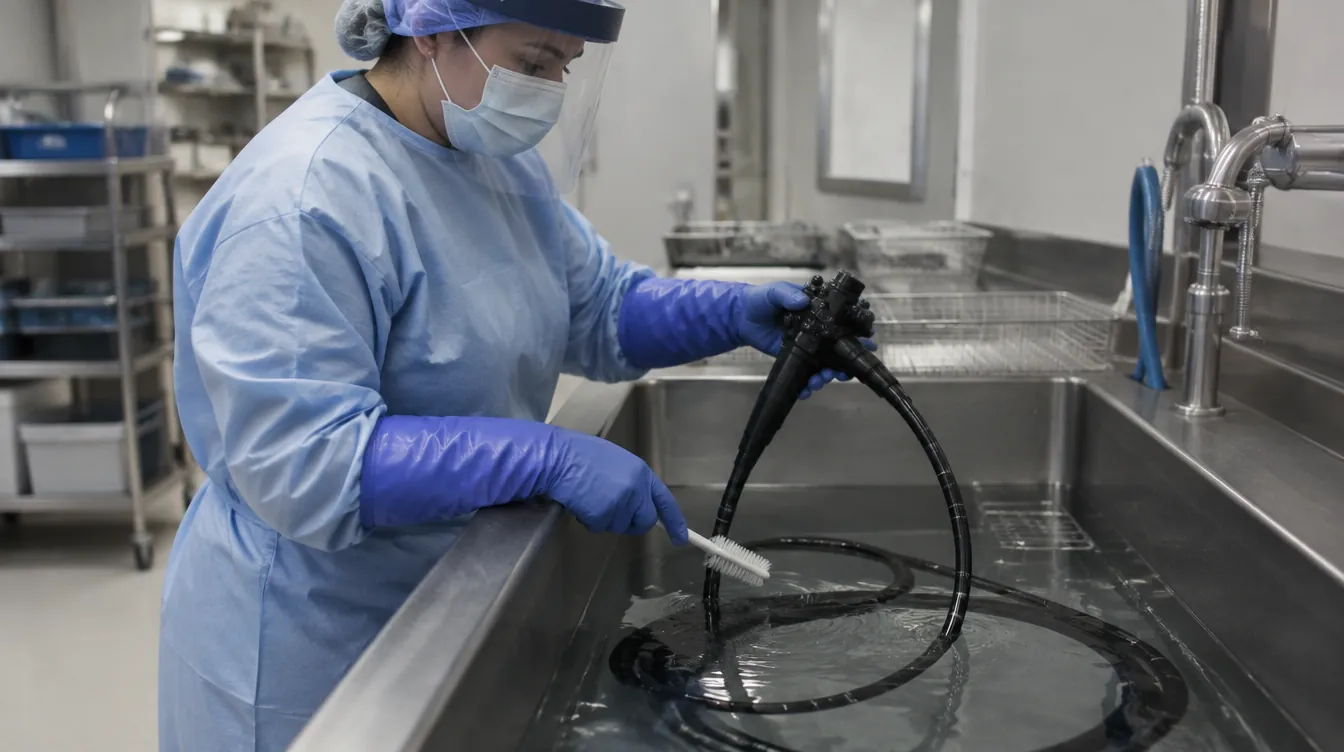
Used instruments arrive from the OR and other units, often within minutes of a case ending. Technicians gown up in full personal protective equipment — gown, gloves, face shield — because everything in this room is treated as contaminated. Instruments are sorted, disassembled, and cleaned to remove all bioburden (blood, tissue, and debris) using enzymatic detergents, manual brushing, ultrasonic cleaners, and automated washer-disinfectors. Cleaning is the single most important step in the whole process: an instrument that isn’t clean cannot be sterilized, no matter what machine it goes through afterward.
Inspection and assembly
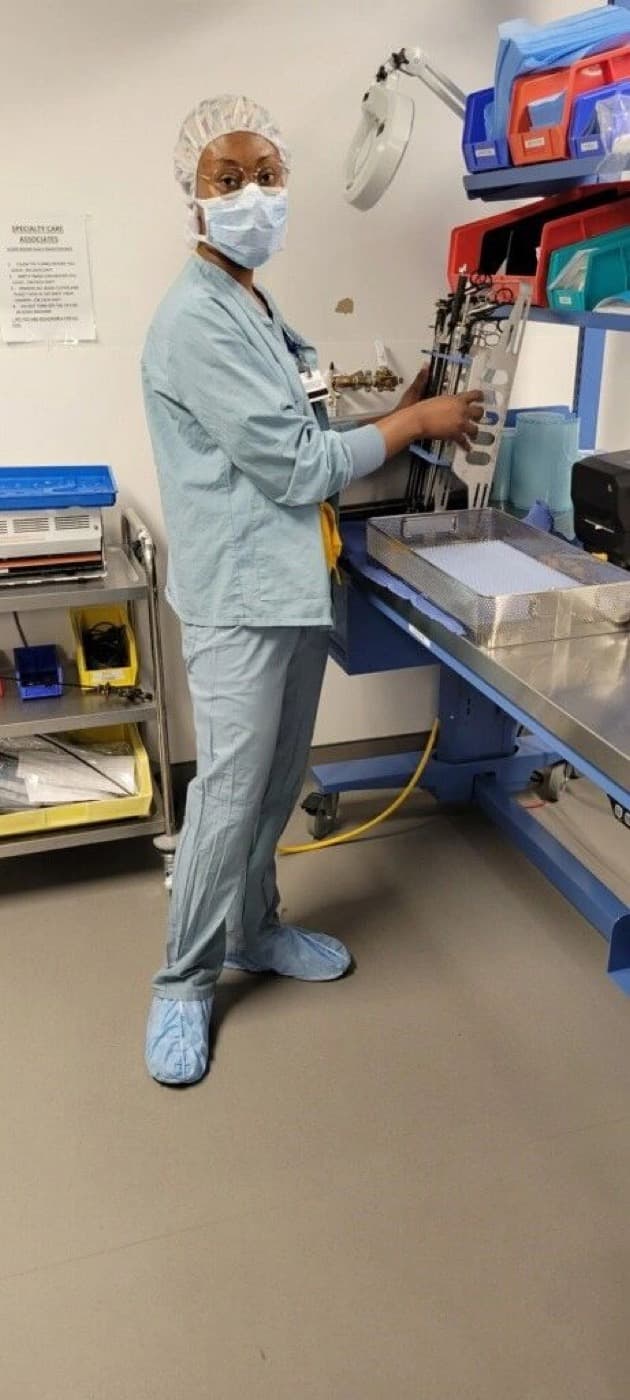
On the clean side, each instrument is inspected — often under lighted magnification — for damage, corrosion, stiffness, and residual soil. Scissors must cut, clamps must hold, insulation on electrosurgical instruments must be intact. Technicians then rebuild instruments into complete sets using count sheets, which list every item a tray must contain, and package each set in wraps or rigid containers designed to keep it sterile after processing.
Sterilization
Packaged sets are run through the appropriate sterilization method — most commonly steam for heat-tolerant instruments, or low-temperature methods like hydrogen peroxide for delicate devices such as cameras and flexible scopes. Every load is monitored with physical, chemical, and biological indicators, and every result is documented. This documentation is a legal record: if a question ever comes up about a tray, SPD can trace exactly which load it was in, which machine ran it, and what the quality indicators showed.
Storage and distribution
Sterile sets are stored in controlled conditions and delivered back to the OR and other units exactly when they’re needed. In many facilities, SPD also builds case carts — a rolling cart stocked with every tray and supply a specific surgery will need the next day.
What a first week in SPD looks like
New technicians almost always start in decontamination. It’s the least glamorous room and the most important one — and it teaches you the instruments faster than anything else. Expect your first week to include:
- Learning the department’s one-way workflow and where you’re allowed to walk
- Getting fitted for PPE and drilled on how to put it on and take it off safely
- Shadowing an experienced tech at the sinks and washers
- Slowly learning instrument names — there are thousands, and no one memorizes them all in a week
- Being quizzed (kindly, usually) by senior techs who want to see you take the details seriously
From there, most departments rotate you through assembly, then sterilization, then case carts and distribution. Within a few months you’ll have touched every stage of the workflow — which is exactly the experience the CRCST credential requires.
Who works in SPD
The people doing this work are sterile processing technicians (also called central service technicians). It’s a hands-on, detail-driven role that doesn’t require a four-year degree — most people start with a focused training program and a certification.
The standard credential is the CRCST. If that term is new to you, start with What Is a CRCST? — and if you want the detail on the exam itself, see What Is the CRCST Exam?
Aseptic Technical Solutions is an independent training provider and is not affiliated with HSPA.
The U.S. Bureau of Labor Statistics tracks the role under the title medical equipment preparers — you can look up current national and state pay data on the BLS website.
Is SPD the right fit for you?
The technicians who thrive in SPD tend to share a few traits:
- Detail-oriented. A missing instrument on a count sheet is a problem you catch, not one you shrug at.
- Process-driven. The workflow exists for a reason, and you like following a system that works.
- Comfortable on your feet. It’s physical work — standing, lifting trays, pushing carts.
- Motivated by purpose. You’ll rarely meet the patients you protect, but every tray you process matters to one of them.
If that sounds like you, the path in is shorter than you might think. Most people go from “never heard of SPD” to certification-ready in a matter of months — see How Long Does It Take to Become a Sterile Processing Technician? for realistic timelines.
How to get into sterile processing
You don’t need a hospital connection or a nearby school to start. A good training program teaches the SPD workflow above, prepares you for the CRCST, and helps you get the hands-on experience the credential requires. The full path is laid out step by step in How to Become a Sterile Processing Technician.
One thing to check early: several states — including Connecticut, New York, New Jersey, Pennsylvania, Tennessee, and Delaware — legally require certification to work in the field, and Minnesota’s requirement takes effect January 1, 2028. Check your state’s rules here.
ATS offers two paths — live virtual and in-person — all built on the HSPA 9th Edition and backed by real hospital internship assistance. We’ve been training sterile processing technicians since 2017.
Curious whether it’s the right move? Grab our free Career Roadmap and map out your first step into sterile processing — or browse the FAQ for quick answers.
Frequently asked questions
Is SPD the same as Central Sterile or Central Service?
Yes. Sterile Processing Department, Central Sterile, Central Service (CS), and Central Sterile Supply (CSS) are different names for the same department. Job postings use all of them, so search for every variation when you start looking for work.
Do sterile processing technicians work with patients?
Not directly. SPD is a behind-the-scenes department — you protect patients by making their instruments safe, but you typically won’t provide bedside care. That makes it a great healthcare entry point for people who want meaningful work without direct patient contact.
Do I need a degree to work in SPD?
No. Sterile processing doesn’t require a college degree. Most technicians complete a focused training program, earn the CRCST credential, and complete supervised hands-on hours — a path measured in months, not years.
Is SPD physically demanding?
Moderately. Expect to stand for most of a shift, lift instrument trays, push case carts, and wear full protective equipment in the decontamination area. It’s active work, but it’s a routine most people adjust to within a few weeks.
What’s the difference between SPD and the OR?
The operating room is where surgery happens; SPD is where every instrument used in that surgery is cleaned, inspected, sterilized, and staged. The two departments work as partners — the OR depends on SPD for safe, complete, on-time instrument trays.