Before you commit to any career, it’s fair to ask: what is it actually like to be there all day? For sterile processing, the honest answer is that it’s physical, methodical, behind-the-scenes work on a schedule set by the operating room. Here’s a realistic look at the environment, the hours, and the demands — so there are no surprises.
The physical environment
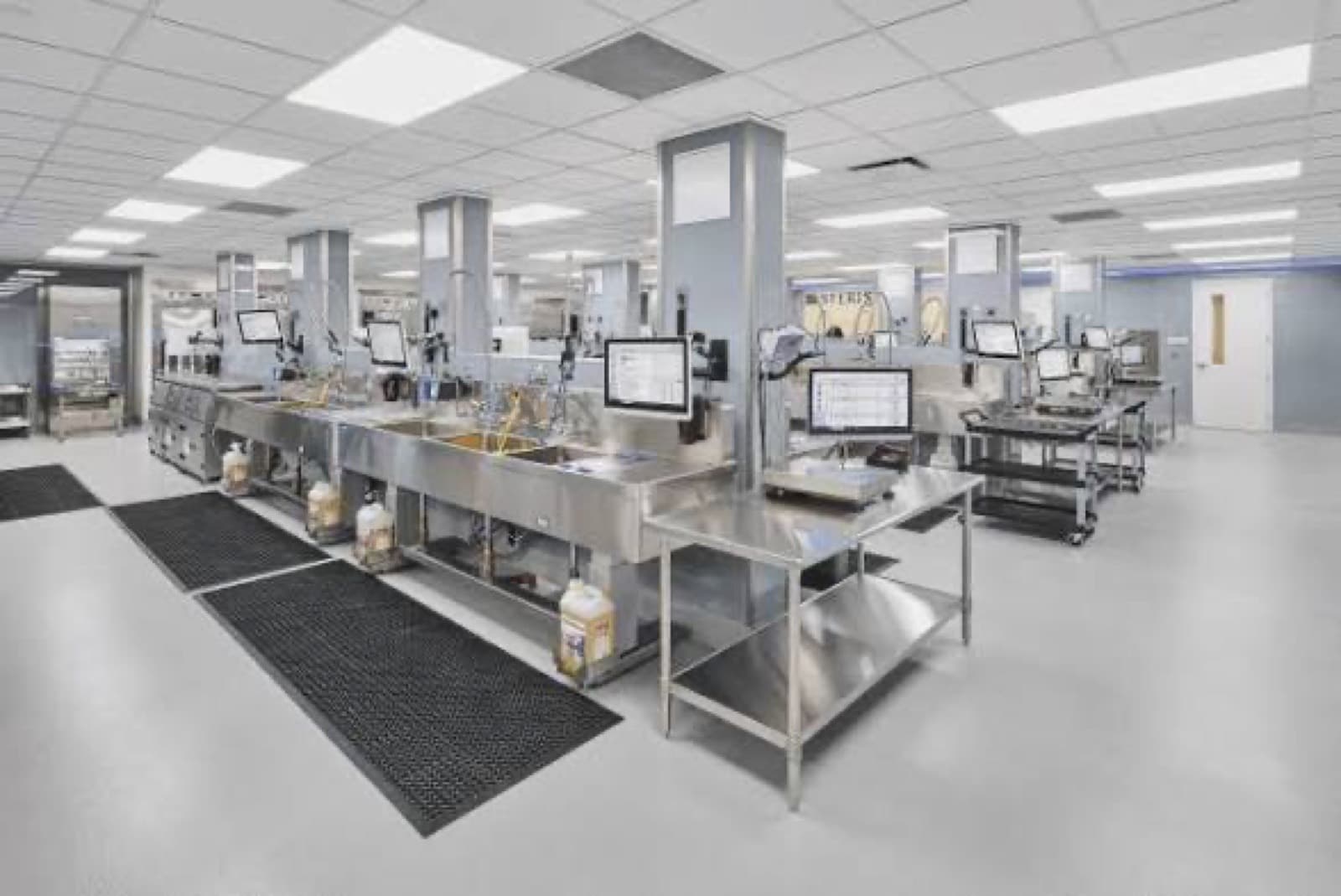
A sterile processing department is built around a strict, one-directional flow, and the “feel” changes as you move through it:
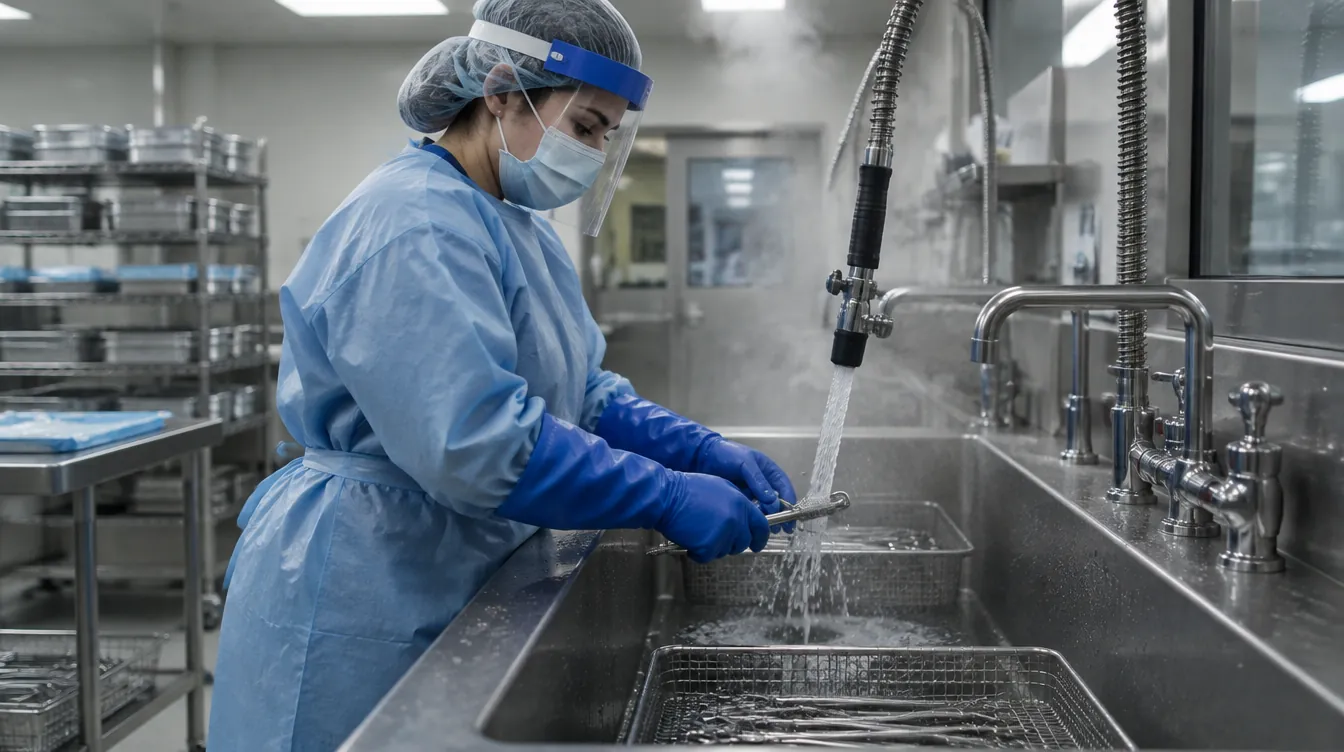
- Decontamination (the dirty side): the most physical zone. You work in full protective equipment — gown, gloves, mask, face shield — around washer disinfectors and ultrasonic cleaners. It’s warm in the gear, and you’re handling soiled, biohazardous instruments under strict safety protocol.
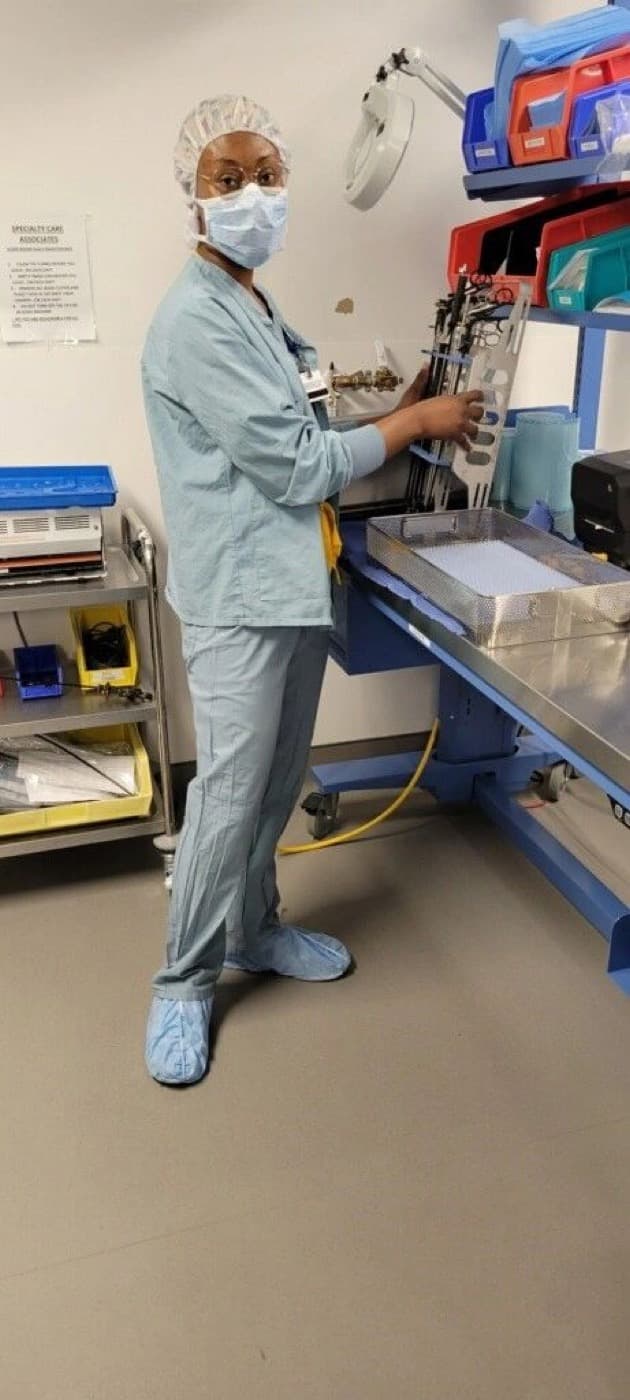
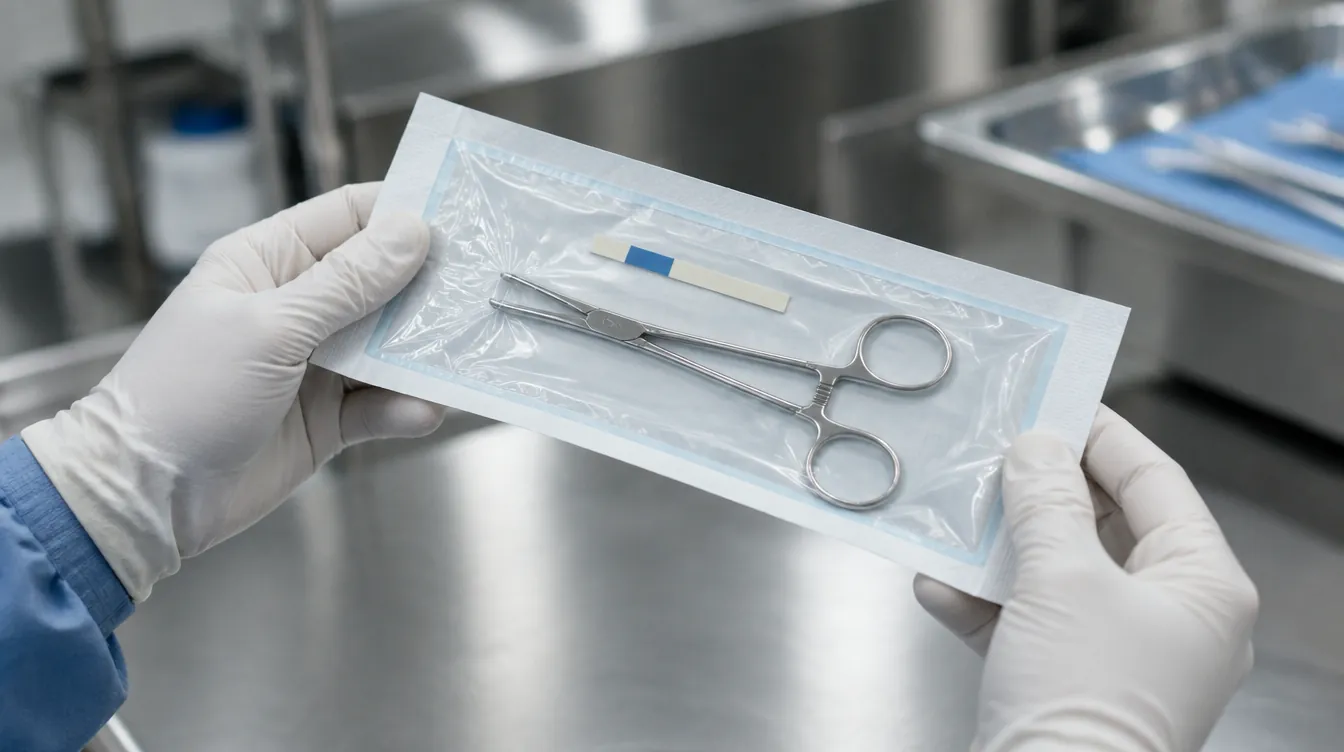
- Prep & packaging (the clean side): cooler, quieter, and precise. You inspect and assemble trays under good lighting, often with magnification.
- Sterilization: around large steam and low-temperature sterilizers; it can run warm near the equipment.
- Storage & distribution: cooler, controlled sterile-storage areas, plus moving case carts through the facility.
For the full station-by-station tour, see What Does a Sterile Processing Technician Actually Do?
The physical demands
This is an active job. Realistically, expect to:
- Stand and move for most of your shift
- Lift instrument trays and push loaded case carts
- Wear PPE for stretches in decontamination
- Use your hands constantly, with fine motor control for delicate instruments
None of it requires elite fitness, but it’s not a desk job — and most people build the stamina within a few weeks.
The schedule: hospitals never close
Surgery happens around the clock, so sterile processing runs 24/7. That shapes the hours:
- Shifts: day, evening, and overnight shifts exist; many facilities run three shifts plus weekends.
- New techs often start off-shift. Evenings, nights, or weekends are common first assignments — and they frequently pay a shift differential, so off-shift can mean more money.
- Surgery centers keep friendlier hours. Ambulatory surgery centers, endoscopy clinics, and dental groups often run daytime, weekday schedules — worth knowing if a 9-to-5 rhythm matters to you.
Being flexible on shift early on makes you significantly easier to hire — see How to Get a Sterile Processing Job With No Experience.
The mental and emotional side
The work is methodical and repeatable, and the standards never relax — a missed step has real consequences. That suits people who find focus and satisfaction in doing a process exactly right, every time. It’s also low-drama and behind-the-scenes: you protect patients without the emotional intensity of bedside care. Teamwork with a busy OR is constant, and a good department runs on communication and mutual reliability.
The safety culture
Because decontamination involves biohazards and sterilizers involve heat and chemicals, SPD runs on strict safety protocol — PPE, engineering controls, and standardized procedures exist to protect you, and training covers all of it thoroughly. Respect the process and the environment is well-managed.
Aseptic Technical Solutions is an independent training provider and is not affiliated with HSPA.
Is the environment right for you?
You’ll likely thrive if you prefer active, hands-on work over a desk; take pride in precision; are comfortable on a shift schedule; and value steady, behind-the-scenes contribution over the spotlight. If you need constant variety, a strict 9-to-5, or direct patient interaction, weigh that honestly. The full career trade-off is in Is Sterile Processing a Good Career?
The bottom line
Sterile processing is physical, precise, behind-the-scenes work on a schedule the operating room sets — often off-shift at first, frequently with differential pay, in a strictly managed safety environment. For the right person, that adds up to a stable, meaningful place to build a healthcare career. Curious enough to start? Begin with an in-person cohort or grab the free Career Roadmap.
Frequently asked questions
What is the work environment like for a sterile processing technician?
Physical and behind-the-scenes, organized around a strict dirty-to-clean flow — warm protective gear in decontamination, precise inspection and assembly on the clean side, and controlled sterile storage. It’s active, methodical work under strict safety protocol.
What shifts do sterile processing technicians work?
Because hospitals run 24/7, day, evening, and overnight shifts all exist, plus weekends. New techs often start off-shift, which commonly pays a shift differential. Surgery centers and clinics tend to keep daytime weekday hours.
Is sterile processing physically demanding?
Yes, moderately. Expect to stand and move most of the shift, lift trays, push case carts, and wear PPE in decontamination. Most people build the stamina within a few weeks.
Do sterile processing technicians work weekends and nights?
Often, especially early in a career. Hospitals need coverage around the clock, so weekend and overnight shifts are common — and usually pay extra. Ambulatory surgery centers offer more daytime, weekday schedules.
Is sterile processing a stressful job?
It’s detail-pressured rather than high-drama. The standards are strict because mistakes matter, but it’s behind-the-scenes work without the emotional intensity of direct patient care — a good fit for people who like calm, focused precision.