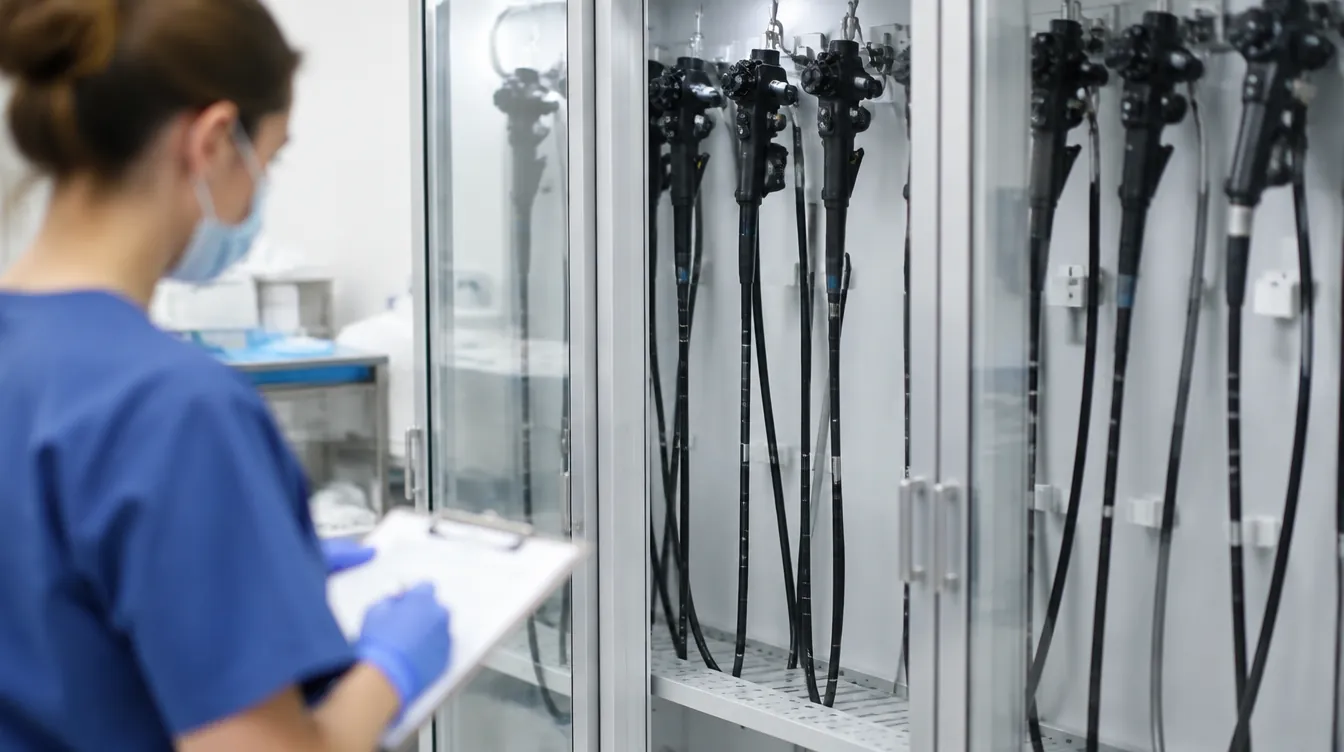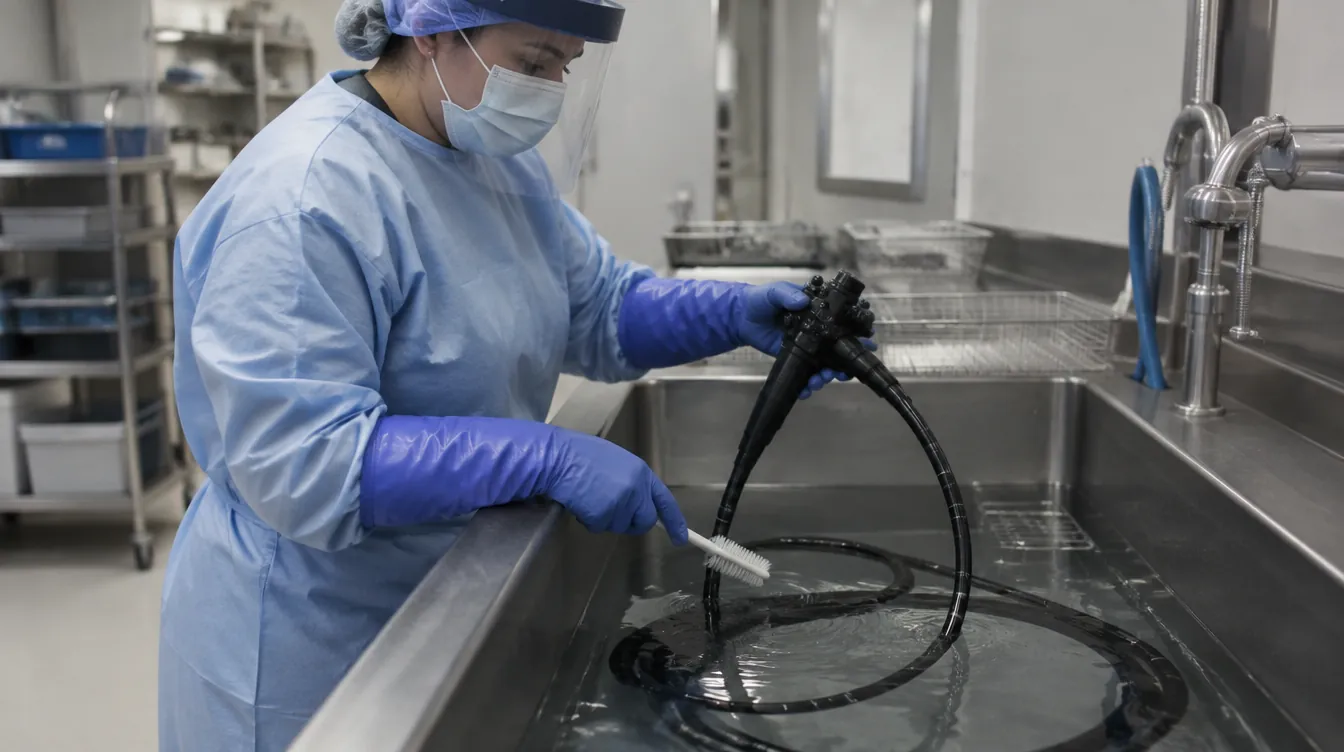
CER certification is for people who want to demonstrate their knowledge of endoscope reprocessing. If you work in sterile processing or an endoscopy department, it can give your professional development a clear direction. The first step is understanding the credential, the experience requirement, and the preparation you actually need.
This guide helps you make that plan. It also explains what joining the new Aseptic Technical Solutions CER class waitlist means while the course is being developed.
What is CER certification?
CER stands for Certified Endoscope Reprocessor. HSPA, the Healthcare Sterile Processing Association, awards the credential. Its focus is the care and reprocessing of endoscopes, including the knowledge behind safe handling and infection prevention.
According to HSPA's CER requirements, CER is a standalone certification: you do not need CRCST certification to apply. Candidates need at least three months of qualifying hands-on endoscope reprocessing experience, completed within the previous three years and before applying. The experience must cover the activities HSPA specifies and be documented by an eligible supervisor who has witnessed the work. A private course instructor cannot simply sign off on experience obtained elsewhere.
Those requirements were checked on October 2, 2026. Use HSPA's current application and handbook when you apply, because the certifying organization makes the eligibility decision.
Is CER the right next step for you?
Start with the work you want to do. A credential is more useful when it supports a specific responsibility or learning goal.
If you already reprocess flexible endoscopes, your goal might be to organize knowledge that you have learned in pieces. You may know your department's daily workflow while wanting a stronger understanding of the reasons behind each part of it.
If you work mainly with surgical instruments, your goal might be a supervised move into endoscope reprocessing. In that case, identify the training and experience opportunity before assuming an exam-prep class will cover every requirement.
If you are new to healthcare, ask which role you are pursuing first. Reading what sterile processing technicians do can help you compare your interests with actual department responsibilities. You do not need to collect every credential at once.
An employer may have its own hiring and assignment requirements. Ask about those directly. An additional certification does not automatically change your job title, pay, or authorization to perform a particular task.
Separate three different goals
People often combine education, experience, and certification into one conversation. Keeping them separate makes planning easier.
| Goal | What you are trying to achieve | Evidence to gather |
|---|---|---|
| Learn the subject | Understand the concepts and explain your reasoning | Study notes, questions, instructor feedback |
| Develop workplace competency | Perform assigned work under your facility's training process | Device-specific instruction and documented assessment |
| Earn the credential | Meet HSPA's requirements and pass its examination | Accepted application and examination result |
A useful prep course can support the first goal and help you organize the third. Your workplace controls its competency process. HSPA controls certification. Understanding those boundaries prevents expensive assumptions about what a course purchase includes.
Write the three goals on separate lines in your notebook. Under each, list what you have completed and what remains unresolved. An empty line is a question to answer, not a reason to give up.
Build your study plan from the official outline
HSPA publishes an exam content outline. Use it as the map for your preparation instead of relying on a collection of social-media questions. The outline covers more than the disinfectant stage: it includes microbiology, endoscope design, work areas, reprocessing, handling and storage, tracking and maintenance, and human factors. Review HSPA's current outline and reference links.
For each topic, create three columns:
- I can explain it: You can describe the concept in your own words.
- I need to review it: You recognize the topic but cannot yet explain why it matters.
- I need to ask: You have a specific question for an instructor, educator, supervisor, or HSPA.
This gives you a study plan based on gaps rather than anxiety. It also prevents an easy mistake: spending most of your time reviewing the material you already enjoy.
A flexible four-part study cycle
The following is a suggested learning routine, not an official HSPA schedule or a prediction of how quickly you will be ready. Repeat the cycle at a pace that fits your experience and responsibilities.
1. Read for the main idea
Choose one narrow topic, such as the purpose of leak testing or the meaning of a device's instructions for use. Read the relevant material from your selected current references. Write a short answer to two questions: What problem does this address? What could go wrong if someone misunderstands it?
Avoid copying an entire chapter into your notes. A paragraph you understand is more useful than several pages you recognize but cannot explain. Mark unfamiliar terms and return to them deliberately.
2. Connect the concept to a workflow
Draw a simple map of where the topic fits. For a documentation topic, identify who creates the information and who needs it next. For a device-design topic, identify the part of the endoscope you need help understanding.
Keep this a learning exercise. A diagram in a notebook is not an approved reprocessing procedure. If your notes differ from a current device instruction, bring the difference to your educator instead of applying your notes at the workstation.
3. Explain it without looking
Close the reference and explain the idea aloud. Use plain language. If your explanation depends on repeating a phrase you do not understand, reopen the source and work on that specific gap.
Try explaining both the ordinary situation and an exception. For example: What information should be available before a device moves forward? What should you do if that information is missing? Questions about uncertainty help develop useful judgment.
4. Review the mistake, then revisit it
When you miss a practice question, record the reason. Did you confuse two terms? Overlook a condition? Choose an answer based on a habit at one facility? Rush through the question?
Each cause suggests a different response. A vocabulary gap needs a clear definition. A reasoning gap needs another example. A reading error needs slower question review. Simply repeating the same question can hide the original problem.
Use a study log that is small enough to maintain
A study log does not need an elaborate app. One page can tell you whether your preparation is moving forward.
| Date | Topic | What I can now explain | Question still open | Next review |
|---|---|---|---|---|
| Your study date | One outline topic | A specific concept in your own words | One focused question | A date you choose |
Choose a manageable number of sessions each week and give each session one purpose. You might read during one session, discuss a scenario during another, and revisit mistakes during a third. The right routine is one you can sustain while working and meeting other responsibilities.
Protect some review time for the least familiar topics. Familiar material often feels productive because you move through it quickly. Progress is better measured by the questions you can now answer accurately.
Make workplace learning conversations specific
An educator can do more with a precise question than with “I do not understand scopes.” Bring the device name, the concept you are reviewing, and the point where your understanding stops.
Useful questions include:
- Where can I find the current instructions for the exact equipment used here?
- Which part of this workflow is covered by my current competency assessment?
- Who should I contact if two instructions appear to conflict?
- What information should I review before asking about a supervised training opportunity?
- How does this department document completion of its training process?
Ask permission before using workplace materials for study. Keep patient information, internal incident details, passwords, and confidential employer documents out of personal notebooks and study groups. You can discuss a concept without copying a real patient's record.
What a useful practice scenario looks like
Consider this hypothetical study exercise: a technician recognizes the endoscope model but cannot locate the current instructions for an accessory supplied with it. Another person says the accessory is probably processed the same way as a familiar one.
The educational task is to identify what is missing. What confirms the accessory's identity? Where would current instructions come from? Who can resolve the question? What facility process prevents an uncertain item from moving ahead?
This exercise does not require guessing a chemical, temperature, or exposure time. It develops the habit of recognizing an information gap and finding the right authority to close it.
Write your answer before discussing it with a study partner. Then compare the reasoning. Two people can select the same answer while relying on very different assumptions. The explanation is where the learning becomes visible.
Choose learning materials carefully
Before paying for any preparation resource, ask how it relates to the current examination outline. Check whether references are identified, explanations accompany practice answers, and corrections are communicated when materials change.
Be cautious about resources claiming to contain actual examination questions or guaranteeing a passing result. Those promises do not help you evaluate teaching quality. A useful provider should be able to describe its educational approach without claiming control over the exam.
Also ask what the purchase includes. A textbook, a discussion class, an exam application, and workplace experience are different things. Do not assume one price includes all four.
For ATS specifically, the CER waitlist page is the place to follow the upcoming offering. Until details are announced, there is no confirmed CER tuition, start date, or class format to budget around.
How to talk with your manager about CER
Make the conversation practical. Explain what you want to learn and how it connects to your current role or an approved development opportunity.
A simple proposal can include your learning goal, the topics you want help understanding, a realistic study routine, and questions about supervised experience. If you are requesting support, be specific about whether you need time, guidance, materials, or information about an internal training pathway.
Avoid presenting certification as a substitute for staffing or department training. It is one part of professional development. Your manager may need to coordinate assignments, educator availability, and service needs before offering a training opportunity.
End the conversation with a clear next action. That could be reviewing the experience requirement together, meeting with an educator, or identifying which questions belong with HSPA. A small agreed action is more useful than a general promise to discuss it later.
Frequently asked questions about CER preparation
Does a CER prep class award the certification?
No. ATS provides education. HSPA awards the CER credential. Completing a preparation course does not establish exam eligibility or replace the certifying organization's requirements.
Can I begin learning before I have a complete experience plan?
You can start learning the concepts while investigating your options. Keep the application requirement separate from your study schedule, and resolve eligibility questions with HSPA before paying an examination fee.
Should I study only high-level disinfection?
No. Use the full exam outline to organize your preparation. Strong study habits connect each topic to the larger workflow and give unfamiliar areas enough attention.
What if I do not know whether my experience qualifies?
Gather the relevant facts about your duties and dates, discuss them with the appropriate supervisor, and ask HSPA. A blog, employer job title, or course advertisement cannot make that determination for you.
Will CER guarantee a promotion?
No credential can guarantee an employer's decision. Use it as part of a development plan that includes demonstrated skills, reliable work, communication, and an understanding of the responsibilities you want to pursue.
Your next step
Choose one open question: eligibility, study materials, or access to supervised experience. Find the person or source that can answer it. Then build a preparation routine you can maintain.
If you want updates about ATS's upcoming preparation option, join the free CER class waitlist. The class is coming soon; the waitlist lets you express interest while details are being finalized.
Aseptic Technical Solutions is an independent training provider and is not affiliated with HSPA. This article supports study planning; workplace procedures remain governed by current instructions and your facility's approved processes.