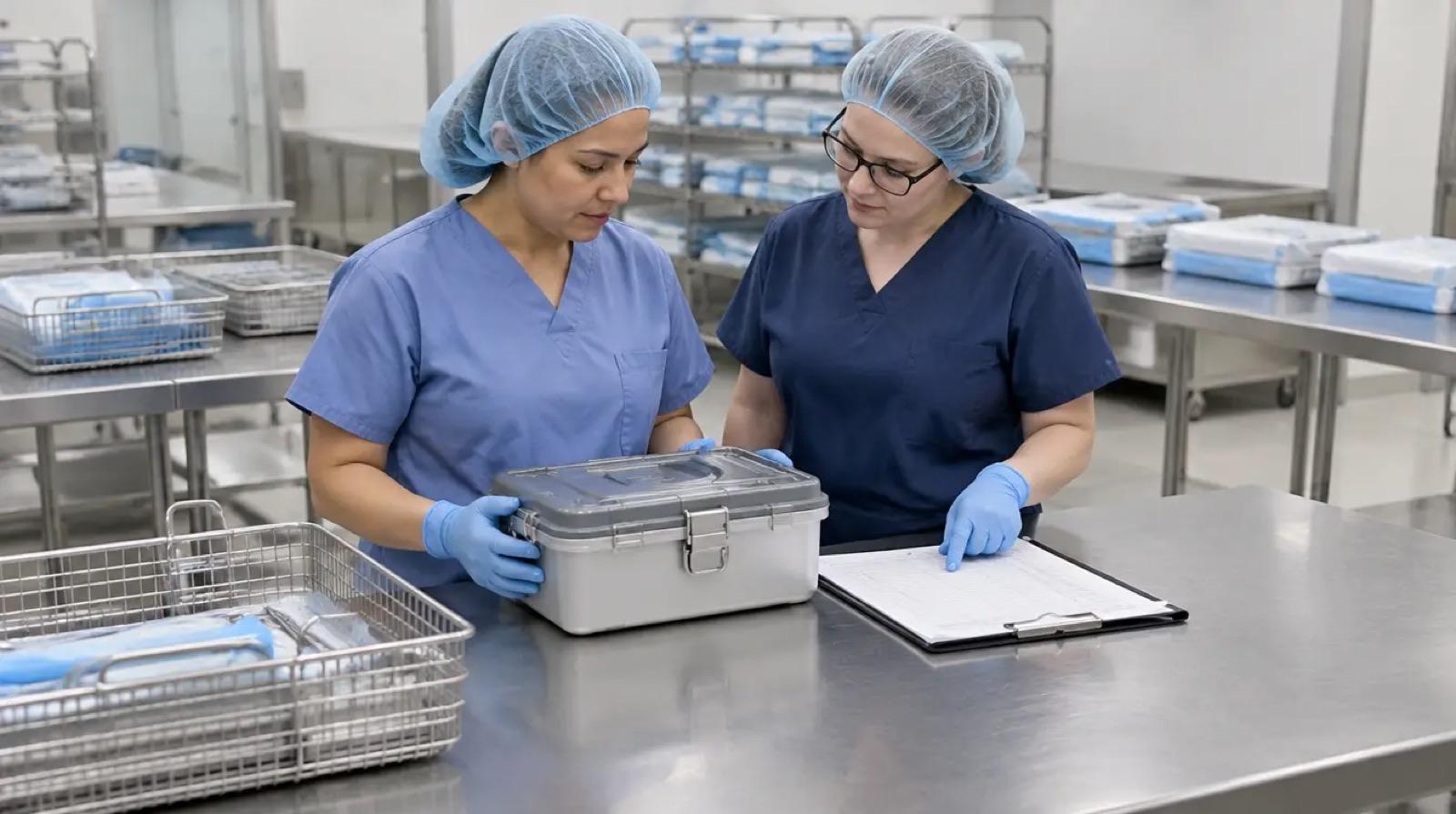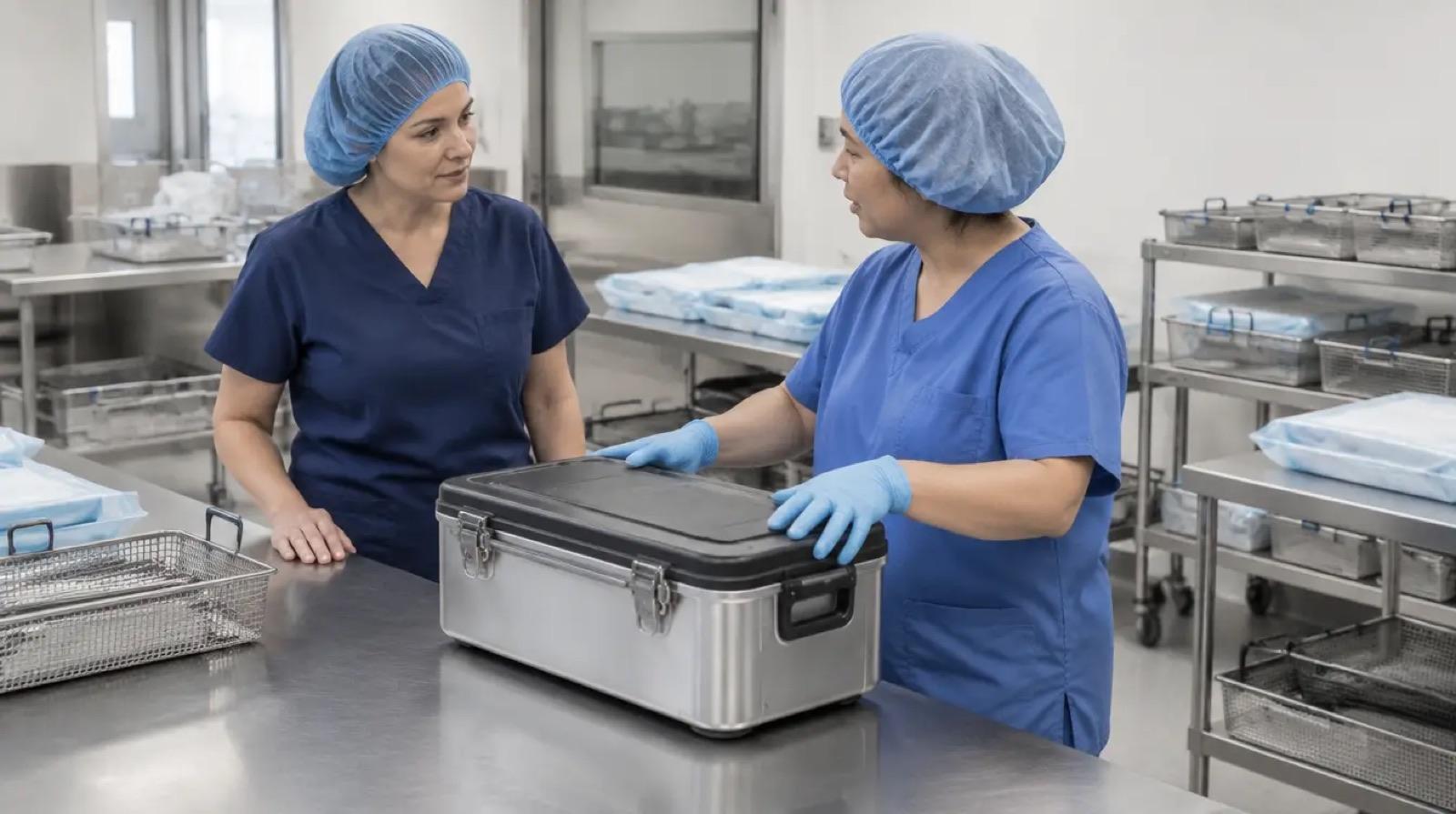
An automated endoscope reprocessor stops before the expected completion message. A procedure team is waiting, another scope is queued, and someone asks whether the interrupted cycle was close enough to finished. The useful answer begins with a clear status: the affected endoscope is not available for patient use while its processing status remains unresolved.
An interrupted AER cycle is a decision point for trained staff, not an invitation to improvise a restart. The required response depends on the actual reprocessor, endoscope, chemistry, interruption, and applicable instructions for use, or IFUs. This guide helps you organize the information and communication around that response. It does not supply a recovery sequence for any machine.
Start with what the interruption does and does not tell you
An alarm tells you something needs attention. It does not, by itself, explain the cause, establish the endoscope's processing status, or authorize release. A power interruption, an operator cancellation, and a machine fault may require different responses. The displayed message belongs in the event record exactly as observed.
The FDA describes AERs as devices that expose endoscope surfaces and internal channels to high-level disinfectant or liquid chemical sterilant. Its discussion also emphasizes validation for particular endoscope and reprocessor combinations. That is why the machine's identity and the affected scope matter when seeking instructions. FDA: Information about Automated Endoscope Reprocessors.
Avoid turning a partial progress display into a clinical conclusion. “The display showed the rinse stage” is an observation. “The scope is ready because disinfection probably finished” is an unsupported release decision. Keeping those statements separate gives the supervisor something reliable to investigate.
Establish control of the affected endoscope
Use the facility's approved status-control process so the affected scope cannot be selected for a procedure by mistake. Identify the device and communicate its unavailable status to the person coordinating scope availability. Follow the equipment instructions for safe access, unloading, containment, and handling; an interruption can leave conditions that require specific precautions.
Do not open a machine, disconnect a scope, bypass an alarm, or manipulate a chemical system based on a generic blog checklist. Those actions belong to the trained operator's approved procedure. If the safe next action is unclear, obtain qualified help before handling the equipment or its contents.
There are two separate communication needs: preventing accidental use and explaining the effect on the schedule. A status tag may address the first while leaving the procedure team unaware of the second. Assign someone to make that notification, including whether another fully processed, appropriate scope is actually available.
Capture a small set of facts before the story changes
An event can become difficult to reconstruct when several people arrive, a screen changes, or the next shift takes over. Use the approved recording system to preserve the facts staff are authorized to collect. Do not delay an urgent safety response just to complete paperwork.
The following is an original discussion template for a facility to adapt. It is not a manufacturer troubleshooting form or a substitute for required cycle records.
| Information to capture | Why the reviewer needs it |
|---|---|
| AER identifier and affected basin, if applicable | Distinguishes the equipment involved from other available units |
| Endoscope identifier and model | Connects the event to the correct device and instructions |
| Cycle identifier and observed start or interruption time | Helps locate the original processing record |
| Exact displayed message | Preserves the observation without guessing its meaning |
| Last confirmed status | Separates recorded facts from remembered expectations |
| Actions already taken and by whom | Prevents a second person from unknowingly repeating an intervention |
| Current location and status of the scope | Supports control during the investigation |
| Person responsible for the next decision | Makes the unresolved work visible |
Use “unknown” where information is genuinely unavailable. Filling an empty field with an assumption makes the record look complete while weakening the investigation. If a later review resolves that uncertainty, add the clarification through the normal correction process.
Find the recovery instructions for this event
Gather the current AER operating instructions, the endoscope's reprocessing instructions, relevant chemical instructions, and the facility procedure. Look for the sections addressing the observed alarm, cycle interruption, power loss, or other actual condition. A quick-reference card is useful only when it accurately points to the applicable approved material.
FDA identifies access to complete manufacturer instructions, staff training, and appropriate equipment as factors affecting reprocessing quality. Its guidance supports device-specific methods rather than a general recovery recipe. FDA: Factors Affecting Quality of Reprocessing.
If the instructions do not resolve the situation, the designated lead should seek clarification from the appropriate manufacturer or technical support team. Record which equipment and event were discussed, the support reference, and how the answer will enter the facility's decision process. A recollection of a call about a different model is not enough.
For help organizing that document search, read how to read IFUs in sterile processing. The immediate goal here is narrower: locate the instructions that address the interruption you actually have.
Ask precise questions instead of requesting permission to guess
“Can we just run it again?” leaves out most of the information a qualified reviewer needs. A better request identifies the model, scope, event code, recorded stage, and actions already taken. Then ask which documented recovery path applies.
Useful questions for the authorized reviewer include whether the equipment needs service, which steps must be repeated, how the scope should be managed during the delay, and what records must accompany the eventual disposition. Ask who will confirm that the response was completed. Do not independently choose a shortened cycle or combine portions of different cycles.
These are questions to resolve through the actual instructions, not technical options this article approves. The answer may differ between events that sound similar in conversation. For example, a lost electronic record creates a different uncertainty from an AER that visibly aborted; both still require a documented review before availability is assumed.
Keep equipment recovery separate from endoscope release
A service update can be easy to overinterpret. “The machine is functioning again” describes the equipment. It does not automatically describe the processing history of the scope that was inside it when the event occurred.
Give the review two distinct closing questions. Has the AER met the requirements to return to its intended operation? Has the affected endoscope completed the required processing and release review? Assign the appropriate authorized staff to each question, and connect their records where the local system allows.
CDC recommendations call for following AER instructions and maintaining endoscope traceability records. Those principles support preserving the link between the interrupted event, the affected device, and subsequent authorized processing. They do not establish a universal restart sequence. CDC: Recommendations for Disinfection and Sterilization.
If there is concern that an affected device was already used, promptly activate the facility's incident and infection-prevention process. The relevant clinical and quality leaders determine the assessment and follow-up. A technician should report the facts without independently declaring that exposure did or did not occur.
Communicate availability without inventing a completion time
The procedure team needs a decision they can work with. Give the current status, what remains unresolved, who is handling it, and when the next update will be provided. An update time is a commitment to communicate; it is not a promise that the scope will be ready then.
A hypothetical message might say: “Scope A is unavailable following an interrupted cycle. The reprocessing lead is reviewing the event with technical support. We are checking another appropriate scope's availability and will update the coordinator after that review.” This is an example of communication structure, not a real facility event.
Avoid offering the remaining cycle time as a completion estimate. The response may involve evaluation, additional processing, records review, or another dependency that is not visible on the machine's display. If the team cannot provide a reliable estimate yet, say that directly.
When another AER is suggested, check the whole pathway
Moving work to another unit can raise a new set of questions. The alternative needs to be an approved option for the actual scope, accessories, chemistry, and process. Its apparent availability does not establish that the department has everything needed to use it correctly.
Ask the designated lead to confirm that the alternative pathway is already approved or to arrange the necessary review. Staff also need the appropriate training and a way to retain the original event's traceability. “It fits in the basin” is not a compatibility determination.
The existing AER and endoscope compatibility checklist explains the compatibility review in more detail. Keep that review distinct from interruption recovery: an approved alternative machine does not answer which processing steps the affected scope needs now.
A tabletop exercise for an interrupted cycle
Use a written scenario during education, with no patient device or live processing cycle involved. Give the learner an imaginary equipment identifier, a sample interruption message, and a note that the procedure team is requesting an update. Ask the learner to explain the first communications and identify the references they would retrieve.
Next, add a service message saying the equipment fault has been resolved. Ask whether that closes the scope's status question. The exercise should reveal whether the learner distinguishes equipment availability from device release and knows who is authorized to resolve each one.
Finally, introduce a shift change. Ask the learner to hand the unresolved event to another staff member using the facility's process. A useful answer explains the scope's location, its status, the outstanding decision, and who owns it. Speed is less important than making the uncertainty visible.
An educator should evaluate this exercise against local procedures and actual equipment instructions. A generic educational example cannot establish competency to operate a specific AER or authorize recovery from a real interruption.
Review repeat events without assuming operator error
If interruptions recur, collect comparable information before selecting a correction. Review whether events cluster around one unit, a particular message, a configuration, a supply change, or another documented condition. A cluster is a reason to investigate, not proof of its cause.
Bring the observations to the people who can evaluate them: reprocessing leadership, the educator, equipment support, facilities when relevant, and infection prevention as indicated. Keep service findings separate from staff recollections until they are reconciled. Avoid describing a problem as “user error” merely because an operator was present.
A practical local improvement might be making the approved event-code reference easier to retrieve or clarifying who receives an after-hours service call. A different finding may require technical service or a manufacturer clarification. Choose the action that addresses the evidence rather than repeating the same training after every alarm.
Track whether the agreed action was completed and whether a comparable event returns. Do not claim that an educational change reduced infection risk or eliminated failures without evidence supporting that conclusion.
Close the event so the next shift can understand it
Before closing the local record, confirm that the affected scope has a documented disposition, the equipment status is clear, and any follow-up work has an owner. Keep the interrupted event identifiable even when subsequent processing succeeds. A successful later result should not erase the earlier interruption from the history.
Ask someone who was not present to read the handoff. Can they identify what happened, what was done, and why the current status is supported? If they must find the original operator to interpret the record, clarify it while the information is still available.
That review is especially useful when an event crosses departments. Technical support, reprocessing staff, and the procedure team may each have a different record of the same afternoon. The goal is a consistent account with appropriate access, not a collection of informal messages on personal devices.
Frequently asked questions
Can an endoscope be used after an interrupted AER cycle?
Do not release an endoscope while its required processing remains incomplete or uncertain. Use the actual equipment and device instructions and the facility's authorized review process to determine recovery and release.
Should every interrupted cycle simply be restarted?
There is no universal restart instruction in this guide. The appropriate response depends on the equipment, endoscope, interruption, and applicable instructions. Obtain qualified clarification when the documented response is unclear.
Does a repaired AER mean the affected scope is ready?
No. Equipment recovery and the affected endoscope's processing status are separate questions. Both need to be resolved through the appropriate local procedures before availability is assumed.
What should a new technician practice first?
Practice identifying an unresolved status, finding the applicable instructions, preserving factual information, and notifying the responsible person. Equipment operation and recovery require device-specific training and assessment.
Build your endoscope knowledge deliberately
For future CER-focused education, join the free ATS CER waitlist. Bring questions about process status, documentation, and escalation into your supervised learning. Understanding how to respond when work stops is part of understanding the workflow itself.