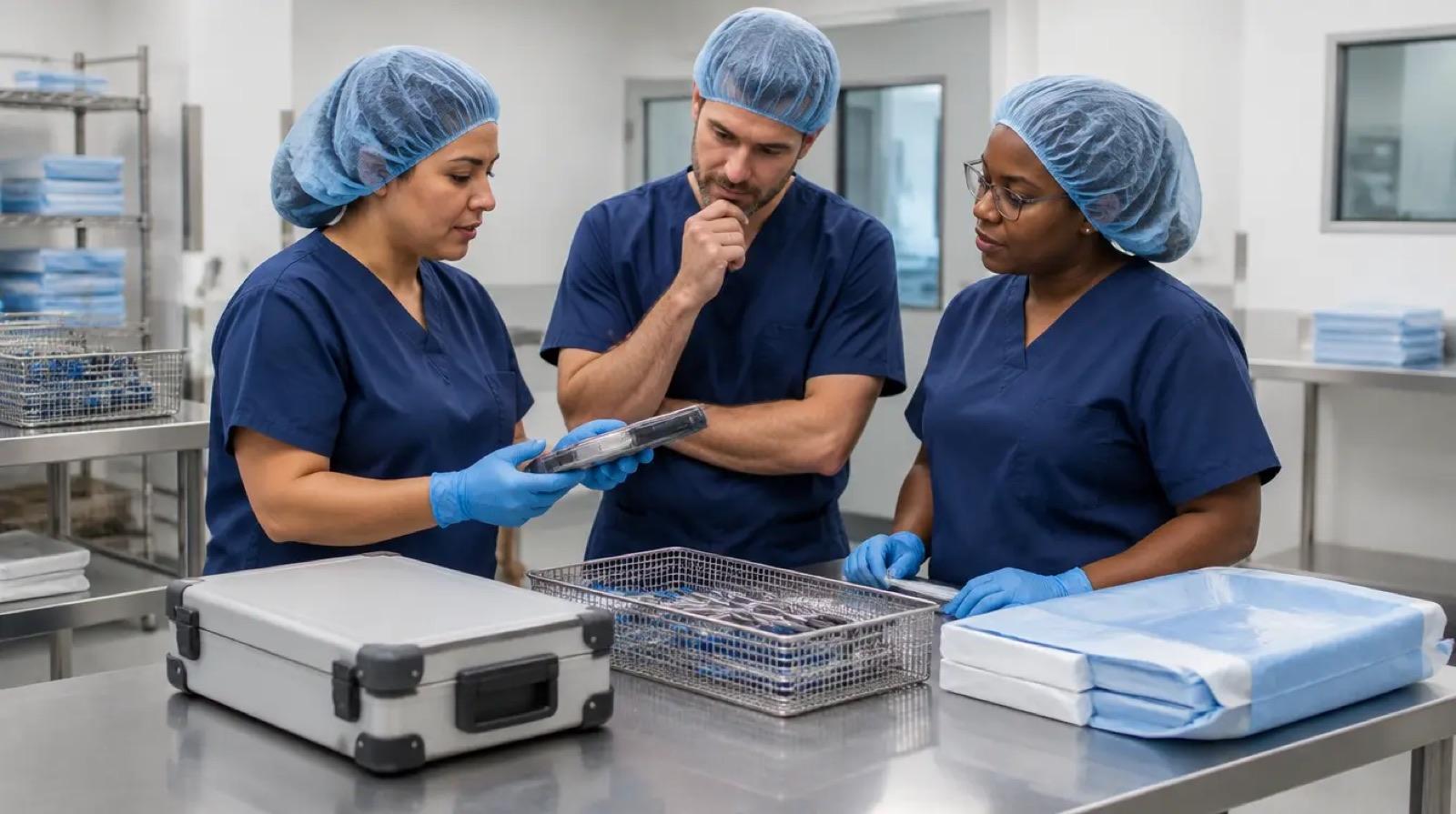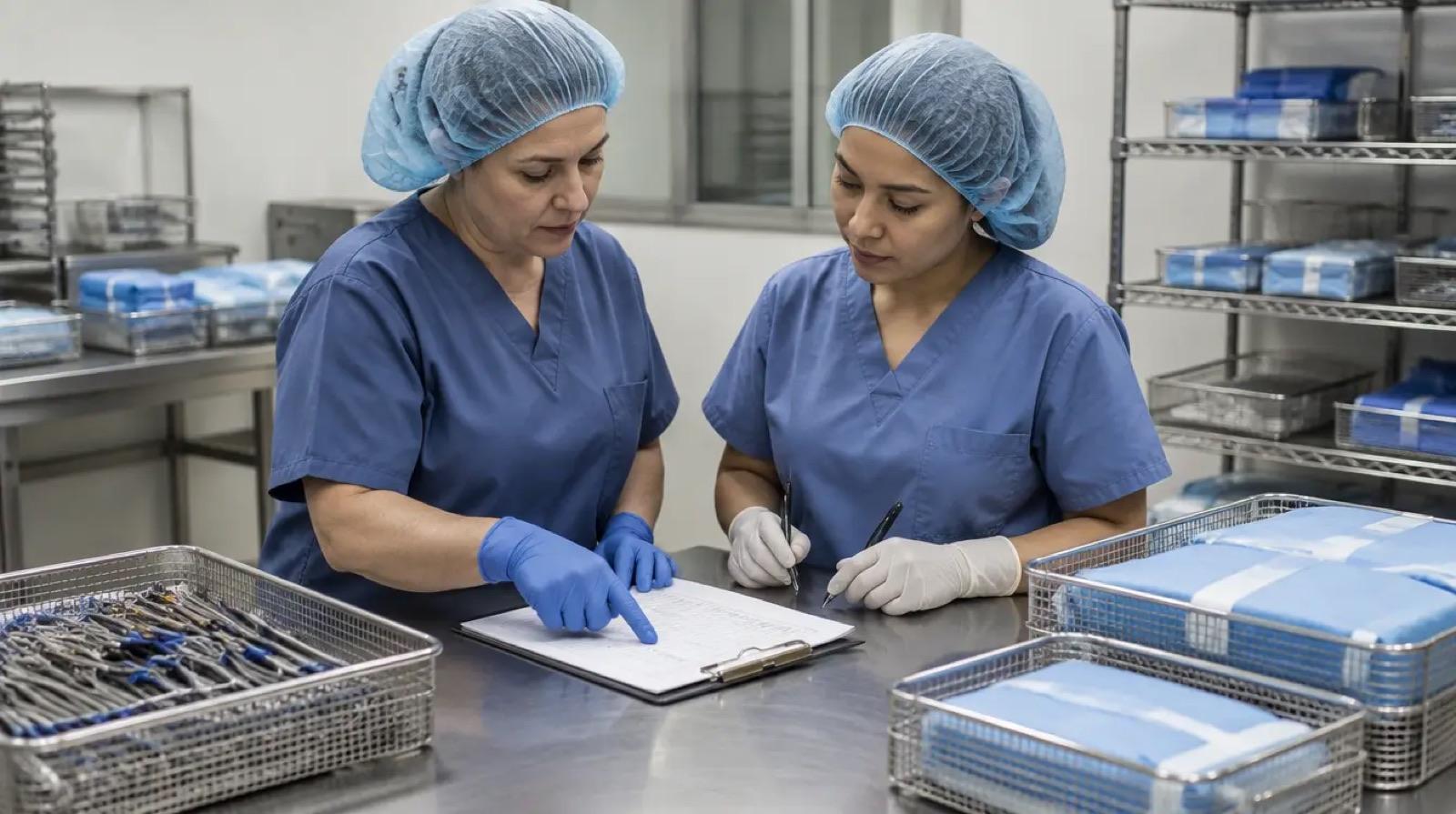
A sterilizer is unavailable, the repair estimate is uncertain, and the operating room wants to know which trays will be ready. An effective sterile processing downtime plan helps the department answer that question without confusing an optimistic production forecast with confirmed instrument availability.
The plan needs more than a service telephone number. It needs named decision owners, a reliable picture of affected work, approved alternatives, and a way to communicate changing limits. It also needs a clear path back to routine operations when the immediate equipment problem has been resolved.
This guide offers an original planning framework for SPD leaders to adapt with their facility's responsible teams. It is not an emergency operating procedure, a technical restart checklist, or permission to change validated processing instructions. The actual equipment IFUs, applicable standards, facility policies, and authorized clinical decisions govern the response.
Define downtime by the work you cannot complete
“One machine is down” can understate the operational problem. The unavailable resource might be essential to a particular device family, serve several work areas, or depend on the same utility as another machine. A department needs to understand the affected workflow, not just count the remaining equipment.
Start with the observed limitation. Which equipment or service is unavailable? Which processing steps depend on it? Which items are already in progress, and which have not entered that step? Identify what is confirmed and what remains under investigation.
AAMI's 2026 discussion of SPD and healthcare technology management emphasizes equipment instructions and communication among technical support, infection prevention, and processing teams. That supports treating an outage as a shared operational issue. The planning tools below are ATS editorial suggestions, not an AAMI-prescribed downtime protocol. AAMI: Understanding What Sterile Processing Needs from HTM Professionals.
Name the people who can make each decision
An outage can generate many messages while leaving the important decisions unassigned. The supervisor may coordinate processing work but cannot independently repair equipment, approve an unfamiliar process, or decide which clinical cases should proceed.
Create a local responsibility map before an outage. Use roles as well as names so the plan survives vacations and shift changes. Include the route for reaching someone with authority after hours. A contact list that ends at an unattended office telephone is incomplete.
| Decision or task | Role to identify in the local plan | Evidence to retain |
|---|---|---|
| Describe the processing limitation | SPD operations lead | Current affected-work summary |
| Assess equipment or utility condition | Authorized technical or facilities team | Service findings and equipment status |
| Evaluate a proposed alternative process | Designated technical, quality, and infection-prevention reviewers | Approved pathway and its limits |
| Prioritize clinical demand | Authorized procedural and clinical leadership | Communicated priorities and decisions |
| Coordinate outside processing, if approved | Assigned operational and logistics owner | Acceptance, transport, and tracking arrangements |
| Authorize operational resumption | Roles specified in facility policy | Required review and authorization records |
This table is a starting point for discussion. Combine or separate responsibilities according to the facility's actual structure, and identify a backup for each critical function. Staff should know how to escalate when the first contact cannot be reached.
Build an affected-work inventory before making promises
During the initial assessment, distinguish items in an interrupted process, work waiting for the unavailable step, and already released inventory whose status has not been affected. Do not assume every item is affected, or that every item is unaffected, merely because it is in the same department.
Use the approved tracking and status-control process to establish scope. The authorized review should determine the disposition of interrupted work. If a utility or environmental problem may reach beyond one piece of equipment, bring that uncertainty to the appropriate technical and infection-prevention teams.
An operational worksheet can record the item or set identifier, current status, affected step, requested use, assigned reviewer, and next decision. Keep protected information within approved systems. A general planning board rarely needs patient details to show that a processing dependency is unresolved.
The worksheet's purpose is to expose dependencies. “Thirty trays waiting” is less useful than knowing which requested sets have an approved available pathway and which still require a decision. Do not turn an unreviewed backlog into a list of promised completion times.
Separate ready inventory from expected production
The operating room needs to know what is available now and what might become available later. Label those categories clearly in communications. An estimated finish time should carry the assumptions that make it possible, including the availability of staff, equipment, required supplies, and release review.
For a planning exercise, consider a department with one approved alternative machine. It may support some affected sets but not all. Even the supported work must fit into that machine's existing workload. An alternative that exists on paper can still be unavailable for the next requested case.
Use a demand review with authorized procedural leaders rather than letting the loudest request determine the queue. SPD can explain processing capability and uncertainty. Clinical leaders decide how those limits affect patient care and scheduling within their authority.
When a request cannot be supported, state the constraint promptly. A clear limit gives the team time to consider an appropriate alternative. Repeatedly moving an unsupported promise later can leave everyone making decisions from a schedule that never reflected actual capacity.
Review alternatives before the emergency
Potential alternatives may include other approved equipment, an established partner processing service, or an already approved inventory option. List each pathway and the conditions that make it usable. Avoid treating any of them as an automatic substitute for the unavailable process.
FDA explains that reusable devices require specific processing methods and that instructions, equipment, and training affect successful reprocessing. An equipment outage does not remove those dependencies. FDA: Factors Affecting Quality of Reprocessing.
For each proposed alternative, ask who has confirmed the device compatibility, supplies, trained staff, documentation, and release responsibilities. Record limitations in plain language. A pathway approved for one category of work should not quietly become the department's answer for every device.
If the needed alternative has never been evaluated, report that accurately and route it for authorized review. A supervisor's enthusiasm, a vendor's availability, or another department's familiarity does not replace the required local decision process.
Make outside processing a complete arrangement
An outside processor's willingness to help is only one part of a contingency arrangement. The facility also needs an agreed description of what will be sent, who accepts it, how its status is communicated, what records return with it, and who handles discrepancies.
Use a pre-event planning discussion to walk through one hypothetical set from departure to return. Who confirms the receiving site can handle that device? Who coordinates the approved transport pathway? Who reconciles identifiers and contents? What happens if the return is delayed or the package arrives with a concern?
Assign those questions to the appropriate contracting, infection-prevention, logistics, SPD, and clinical teams. Do not improvise transport packaging, containment, or clean-and-dirty separation in this article's name. The approved arrangement must address the actual workflow and applicable requirements.
Include a failure scenario in the agreement review. If the outside provider also loses capacity, who notifies the sending facility and what operational decision follows? A contingency plan should reveal that dependency before staff rely on a courier departure as proof that instruments will return ready on time.
Use brief updates with a consistent structure
AHRQ describes a huddle as a way to communicate adjustments when an existing plan needs to change. That communication concept fits an outage response, although the SPD update format here is an original adaptation. AHRQ TeamSTEPPS: Huddle.
A useful update answers five questions: What is confirmed? What work is affected? What decision is needed? Who owns that decision? When will the next update occur? Keep speculation about the repair separate from confirmed findings.
For example, a hypothetical update could say: “The affected unit remains unavailable. The listed sets are awaiting an approved processing pathway. Technical support is evaluating the fault, and procedural leadership is reviewing priorities. The next operational update will follow that review.” Replace general wording with the facility's actual facts and communication rules.
Give one person responsibility for maintaining the shared operational summary. Otherwise, an early estimate can survive in a text thread after the official plan has changed. Use existing approved communication tools and make clear where staff should find the current version.
Protect the staff who are carrying the backlog
Downtime changes assignments. Staff may handle more questions, manage held items, coordinate transfers, or work with equipment they use less often. Recognize those tasks in the staffing discussion instead of measuring the shift only by completed trays.
Ask whether the revised assignments match each person's training and demonstrated competency. Identify who will answer technical questions while the supervisor is coordinating the broader response. A learner should not become the default operator of an unfamiliar system because experienced staff are busy elsewhere.
Plan ordinary needs such as breaks, handoffs, and supervision during an extended response. Fatigue does not become visible only when someone makes an error. A leader can ask what work is accumulating, which tasks are being interrupted, and whether another assignment adjustment is needed.
The existing article on sterile processing quality culture addresses the broader leadership habits. During downtime, those habits become concrete when staff can report a limit without being told to conceal it behind a faster estimate.
Plan recovery as carefully as the outage
Before the incident, identify where the facility keeps its equipment return-to-service requirements and who interprets them for the actual repair or interruption. The necessary inspection, testing, documentation, and authorization depend on the equipment and event. This guide does not prescribe a universal number of test cycles or a restart sequence.
Ask the authorized team to distinguish technical service completion, permission to resume processing, and release of affected items. Those may involve different records and responsibilities. A completed repair ticket should not silently close every outstanding question about the work that was interrupted.
Once operation resumes, revisit the backlog with procedural leadership. The original priority list may have changed during the outage. Confirm the current demand, sequence the approved work, and communicate realistic availability as items meet the facility's release requirements.
Keep the contingency arrangements active until their remaining work is reconciled. A set still at an outside processor, an unresolved inventory discrepancy, or a pending service restriction does not disappear because the primary equipment has restarted.
Test the plan with a tabletop scenario
Choose a focused fictional scenario, such as losing one processing resource during a busy shift. Keep it entirely separate from live production. Ask participants to find the plan, identify the first contacts, and build an affected-work summary using invented identifiers.
Then introduce one complication: the usual contact is unavailable, the proposed alternative cannot process a required device, or the repair estimate changes. Observe how the group reaches a decision and communicates the revised limit. Do not score the exercise by how quickly someone invents a workaround.
Record missing information as a specific action. “Clarify the plan” is difficult to close. “Assign an after-hours contact for approval of the existing outside-processing arrangement” has a visible owner and result. Use the facility's normal approval process for revisions.
Repeat the narrow part of the exercise that failed after the correction is made. A new document does not prove that staff can find it or use it. Ask a participant from another shift to locate the revised instructions and explain the next decision. That gives the team a practical check that the correction is usable beyond the people who wrote it.
Turn the event review into one useful improvement
After the response, compare the first assumptions with what actually happened. Which information was missing? Which alternative worked within its approved scope? Where did an estimate get repeated after it became outdated? Review the process without assigning blame from an incomplete timeline.
Choose an improvement that addresses an observed problem. It might be an updated contact route, clearer status labels, a revised agreement, or a better inventory dependency list. Record the action owner and how completion will be checked.
Avoid claiming that a successful response proves the department can handle every future outage. A narrow exercise or one event tests particular conditions. The useful result is knowing which part of the plan worked and which part now needs attention.
Frequently asked questions
Who should own an SPD downtime plan?
Assign an operational owner and involve the roles that control equipment, infection prevention, clinical priorities, logistics, and recovery authorization. The local plan should identify decision authority and after-hours backups.
Can another sterilizer automatically take the backlog?
No. Confirm that the alternative is approved for the actual devices and processes and that the required staff, supplies, records, and capacity are available. Equipment availability alone does not establish an appropriate pathway.
Does a completed repair ticket authorize instrument release?
Not by itself. Technical service completion, operational resumption, and the disposition of affected items must be addressed through the facility's applicable procedures and authorized reviewers.
How can a department practice without disrupting production?
Use a tabletop scenario with fictional equipment and item identifiers. Test contact routes, decisions, information retrieval, and communication without interrupting live equipment or changing patient-care work.
Make the next planning discussion concrete
Bring one real processing dependency and the current contact list to your next authorized leadership review. If your team wants educational support for improving SPD workflows and leadership practices, explore ATS consulting. Start with a defined operational question and the evidence your department already has.